Travel has a way of exposing every weak spot in your phone plan. The moment you land, your carrier’s welcome text arrives with a polite greeting and a painful roaming rate. That’s usually when people start hunting for a better option. Over the last few years I’ve tested a stack of travel eSIMs across North America, Europe, and parts of Asia. Free trials and low‑cost starter packs can be a smart way to gauge coverage and speeds before you commit. They’re not all equal, and the details matter.
This guide explains how eSIM trials work, where to find the most traveler‑friendly offers, and what to watch out for so your “free” data doesn’t turn into support tickets and dead connections at the airport. I’ll also point you to reliable, low‑cost eSIM data options for the USA, the UK, and broader international trips.
Why eSIM trials exist and how they actually help
An eSIM is a digital SIM card. Instead of visiting a store or swapping a plastic SIM, you scan a QR code and install a profile on your phone. For tourists, that removes the choreography of finding a kiosk, verifying identity, and fumbling with a SIM tray in a taxi queue. For providers, eSIMs lower costs and let them hand out small, promotional data awards at almost zero logistics expense.
Trials fall into a few types. Some are truly free, giving you a slice of data, such as 100 MB to 1 GB, for a few days. Others are $0.50 to $2, positioned as refundable or nearly free. The point is to let you test coverage, latency, and speeds where you plan to use your phone. You’ll notice some vendors anchor on taglines like eSIM free trial, eSIM free trial USA, or free eSIM trial UK to match search traffic, but the substance is what counts: how quickly you can activate, whether 5G is included, and what networks are used in the background.
Trials should help you do three things before you spend real money. First, confirm your phone supports eSIM and can hold multiple profiles. Second, test signal quality in your first hotel, along your transit route, and at popular sites. Third, try the app and support. A travel eSIM for tourists is only as good as its onboarding flow.
Compatibility comes first
Not every phone handles eSIM the same way. Recent iPhones, Google Pixels, and most Samsung Galaxy models do well. Dual eSIM on iPhone means you can keep your home number active for calls and SMS while using a prepaid travel data plan for internet. That’s the cleanest way to avoid roaming charges without missing your bank’s two‑factor texts.
Some dual‑SIM Android models allow a physical SIM and a single eSIM at once, which is fine for most travelers. Where people get tripped up is with older devices that either lack eSIM entirely or support it but limit simultaneous profiles. It’s worth checking your model on the manufacturer’s site before boarding. If you need to receive calls on your home number while you travel, confirm the phone can keep that line active while routing data through a temporary eSIM plan.
What a proper eSIM trial should include
You don’t need much data to test a network. A solid eSIM trial plan usually offers 100 to 300 MB for 1 to 3 days, enough to install the profile, pull maps, run a speed test, and open a ride‑hailing app. Many international eSIM free trial offers now include nationwide 4G or 5G and tethering. The key details to scan:
- Activation method: Does the app allow free eSIM activation trial without forcing a purchase first, or does it require a payment method and refund later? Network partners: In the USA, look for AT&T or T‑Mobile access. In the UK, O2, EE, Vodafone, or Three. If the provider lists network names openly, that’s a good sign. Real expiration: Trials that say “24 hours from activation” are ideal for a same‑day test. “Until midnight UTC” can cut your test short if you activate late. Top‑up path: Once you like the connection, can you convert the trial eSIM for travellers into a paid plan without reinstalling? Fair use: Some “unlimited” trials throttle after a small bucket. A clean 100 to 500 MB at full speed is more useful than throttled unlimited.
That’s the first of only two lists in this article. Everything else is better handled in sentences and examples.
Where trials shine, and where they fall short
Trials are excellent for figuring out which networks cover the neighborhoods you’ll inhabit, especially in the USA where a few blocks can change your signal fate. I’ve used a free eSIM activation trial to compare speeds at San Francisco’s Embarcadero: one provider’s 5G sold as “nationwide” dropped to 2 Mbps indoors, while another quietly delivered 60 to 80 Mbps from the same bench. In London, a free eSIM trial UK helped verify that my hotel’s concrete elevator core didn’t kill the signal.
The shortcomings rarely show up in the marketing. Some trials require app sign‑in with an email and verification code. That’s fine unless you’re stuck with hotel Wi‑Fi that blocks certain outbound emails. A few apps refuse to proceed without a payment method even for a zero‑cost plan, which muddies the idea of try eSIM for free. Occasionally the “$0.60 trial” is more like a token charge to validate your card, and it may not be refundable. If you’re evaluating an eSIM $0.60 trial, treat it as a low‑cost eSIM data sample rather than a strict freebie.
The USA: realistic expectations for eSIM free trial USA
Coverage and speed vary by city. In major metros, both AT&T and T‑Mobile typically offer strong 5G outdoors with excellent download rates and good latency. Indoors, the story changes. I’ve found T‑Mobile’s mid‑band 5G reliable in newer buildings, while AT&T sometimes wins in older structures with thicker walls. If you plan to work from a café, run a quick test inside, not just on the sidewalk.
A credible eSIM free trial USA should install smoothly, show clear carrier labeling in settings, and avoid aggressive throttling. Look for plans that convert to paid daily or weekly passes. A prepaid eSIM trial that upgrades to a 3 GB or 5 GB pack often yields better value than daily unlimited, which can be slow or capped.
If you need voice beyond Wi‑Fi calling, pay attention. Many travel eSIMs offer data only. You can still call over WhatsApp, FaceTime, or Google Voice, but emergency calling may not behave like your home SIM. Keep the home line active for SMS codes. For https://canvas.instructure.com/eportfolios/4205964/home/short-term-esim-plan-trials-3-14-day-options_2 calls to US numbers, a VoIP app with a few dollars of credit is often enough for a short trip.
The UK: what to look for in a free eSIM trial UK
In London, Manchester, and Edinburgh, 5G is mature on multiple networks. Outdoors you’ll see impressive speeds, sometimes above 200 Mbps, though day‑to‑day range sits anywhere from 30 to 150 Mbps. A short‑term eSIM plan with 3 to 10 GB will easily cover maps, messaging, and light social use for a week.
Trials in the UK tend to be straightforward, but read the fine print on personal hotspot. Some cheap data roaming alternative plans block tethering on an entry tier, which matters if your laptop needs a burst of data. If you’re headed to rural areas, even the best eSIM providers ride the limits of local infrastructure, so caching offline maps still helps.
Europe beyond the UK, and multi‑country trips
One of the perks of a global eSIM trial is the ability to hop borders without reconfiguring. A mobile eSIM trial offer with EU coverage can be cost‑effective if you plan to visit several countries in a week. That said, fair use policies vary. What counts as “Europe” might exclude microstates or certain non‑EU countries. I’ve crossed from Germany into Switzerland and watched generous 5G turn into cautious 4G, still usable but clearly shaped by inter‑operator agreements.
If you only need data in two countries, compare a regional plan to two single‑country plans. Regional is simpler but can cost more per GB. When you see international eSIM free trial branding, confirm the included countries and the per‑country data cap, if any.
Asia and the Middle East: different patterns, same principles
In Japan and South Korea, urban 5G is excellent. Trials here tend to be clean and fast, but sometimes come with strict expiration timing. In Southeast Asia, multi‑country eSIM offers are common, and the experience can swing from flawless in Singapore to variable in parts of Thailand or Vietnam depending on tower density and time of day. The Middle East is a patchwork. You’ll want to check hotspot permissions and supported bands more carefully, as premium bands may not be open to roaming partners on entry‑level plans.
How to install a trial eSIM without breaking your primary line
The safest approach is to keep your home SIM enabled for calls and SMS, then set the eSIM as your data line. On iPhone, name the lines clearly so you don’t mix them. Install the eSIM over Wi‑Fi before you leave, but do not activate data roaming until you land. That way you avoid your home carrier’s roaming handshake. Android users should ensure the data toggle points at the eSIM and that MMS messages on the home line don’t try to pull data from the wrong place.
For authentication apps and banking, allow a few hours for services to recognize your new IP footprint. Some security systems flag a US‑to‑EU jump within minutes. If a transfer fails, switch to the home line for a retry.
Picking between a trial and a low‑cost starter pack
If you’re landing late at night or have a tight connection, a free trial introduces one extra variable: it might require account verification or a tiny payment you can’t process half‑asleep. In those cases I choose a $2 to $5 starter pack that activates instantly. A prepaid travel data plan at that price buys peace of mind and enough data to get to the hotel. The mobile data trial package can wait for a calmer moment.
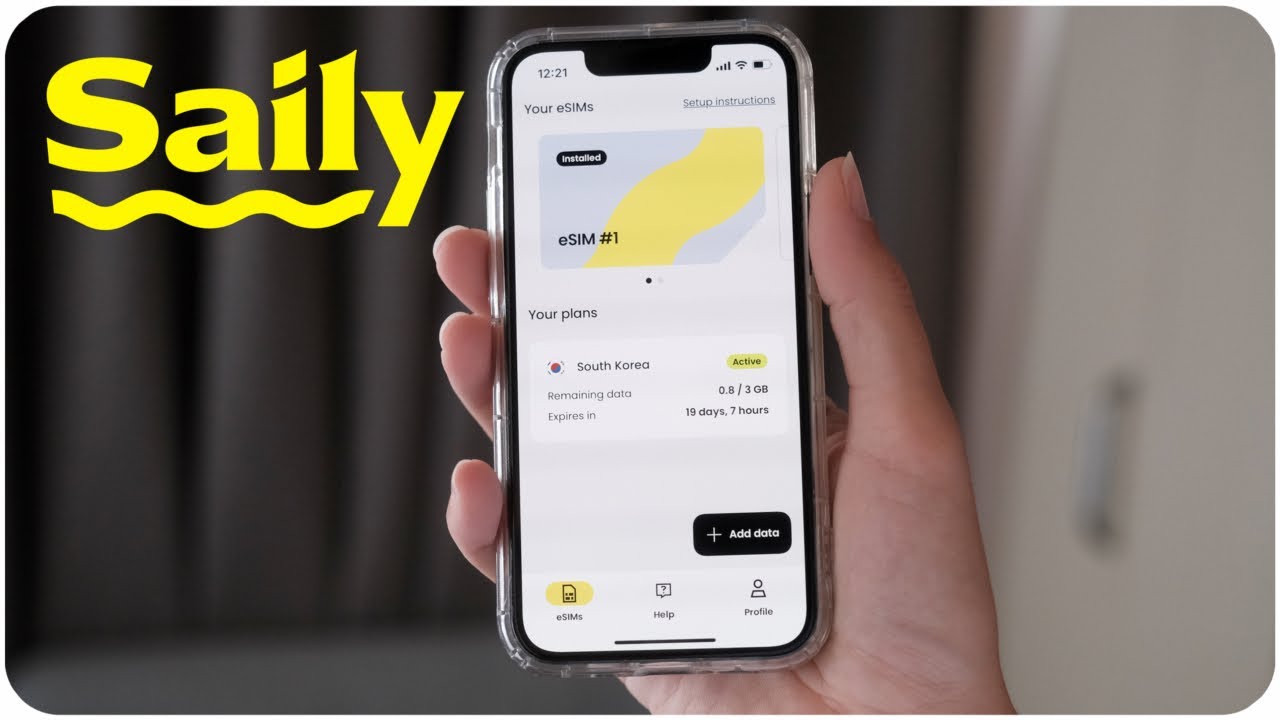
For trips with uncertain itineraries, a temporary eSIM plan that lets you top up in small increments is ideal. It should display usage in the app in near real time and warn you at 80 percent. The best eSIM providers treat transparency as a feature, not a support burden.
Signals from real use: a few snapshots
New York City, Midtown: two providers on T‑Mobile’s network. One trial limited to LTE despite 5G hardware, the other allowed 5G with 300 MB free. The 5G trial delivered 90 Mbps down beside Bryant Park at noon, dipped to 12 Mbps inside a crowded café, then returned to 60 Mbps outside. The LTE‑only trial held steady at 10 to 15 Mbps but felt laggier loading map tiles.
Los Angeles, Westside: AT&T‑backed plan showed stronger indoor coverage in a ground‑floor apartment than a T‑Mobile‑backed plan. Speeds were roughly 40 vs 25 Mbps down, both with acceptable latency for video calls. If your housing is older concrete, AT&T partners can have an edge.
London, Shoreditch: a free eSIM trial UK with 200 MB lasted long enough for an hour of navigation, a ride request, and a quick download of a few offline playlists. Upgraded to a 5 GB plan in two taps. The plan allowed tethering, which mattered when the hotel Wi‑Fi throttled at dinner time.

Barcelona, Gothic Quarter: two EU regional plans alternated between 5G and 4G as we moved through narrow streets. A quick speed test showed 50 Mbps on a balcony and 8 Mbps by the elevator bank, both usable for maps and messaging.
The economics behind “free” and what it means for your trip
Providers eat network fees on trial traffic, so they design trials to be short and small. That’s fine if you treat them as a test drive. When a vendor advertises try eSIM for free but asks for a card, it’s often fraud prevention rather than a bait and switch, though the $0.60 hold may settle. Assume any micro‑charge is money spent. The trade‑off is simple: a slightly less free start, in exchange for a smoother path to a paid plan when you’re satisfied.
Cheap data is not the only metric. I value predictable latency over peak speed because video calls and rideshare apps punish jitter. A low‑cost eSIM data plan with consistent 20 to 40 Mbps and stable pings beats a headline 5G plan that oscillates wildly.
Managing dual‑line life on the road
One common mistake is leaving iMessage or RCS tied to the wrong line. On iPhone, set iMessage to use your Apple ID so messages flow over whichever data line is active. On Android, open your messaging app and confirm the default SIM for SMS. For two‑factor codes, keep your home line active but disable its data roaming to avoid stealth charges. If your bank insists on a phone call, Wi‑Fi calling can bridge the gap, or you can briefly switch voice to the home line while keeping data on the travel eSIM.
Hotspot usage burns data faster than people expect. A single video call on a laptop can chew through 400 to 700 MB per hour. If your plan allows tethering, ration it for short bursts: map downloads, airline check‑ins, and light document sync. Save software updates for hotel Wi‑Fi you trust.
Practical steps to evaluate a mobile eSIM trial offer
This is the second and final list, a compact checklist you can follow in five minutes at the airport café.
- Confirm device support and unlock status before traveling, then pre‑install the app while on home Wi‑Fi. Choose a trial aligned to your first stop: eSIM free trial USA if you land in the States, free eSIM trial UK for the UK, or a global eSIM trial if you cross borders within days. Activate the trial only when you’re ready to test, run a speed test inside and outside, then open maps and a rideshare app. Check hotspot toggles and network label; note whether you’re on 4G or 5G and whether the label matches expected partners. If the experience feels right, convert to a paid plan within the app, favoring a prepaid eSIM trial upgrade that allows top‑ups without reinstalling.
When a local SIM still makes sense
If you’ll stay in one country for a month or more, a local operator can beat roaming‑based eSIMs on price per GB, especially in places like Thailand or Portugal where domestic prepaid packs are cheap. The trade‑off is time and ID checks. Some countries require passport registration, and some kiosks do not speak much English. If you’re on a tight schedule or arriving after hours, a temporary eSIM plan fills the gap, and you can switch later.

Business travelers with compliance needs may prefer providers that issue VAT receipts and document data protection standards. Consumer‑oriented apps sometimes skip detailed invoices, which can be a headache for expense reports.
How to read plan descriptions like a pro
Marketing language is slippery. “Unlimited” often means “fast until a threshold, then 512 kbps.” For maps and chat, 512 kbps is livable, but web browsing turns molasses‑slow. If you see phrases like mobile eSIM trial offer or trial eSIM for travellers alongside “unlimited,” scan for a fair use section. A clear plan will state both a high‑speed bucket and the throttle level.
Look for time zones in expiration rules. If a day resets at midnight UTC, a trial started at 9 p.m. in San Francisco will expire in three hours. Plans that count 24 hours from activation are friendlier for jet lag.
Check whether the plan locks to a single IMEI. Some eSIMs bind to your device, which is normal. It becomes a problem only if you planned to move the plan to a backup phone. If you carry two devices, consider separate trials.
A few provider patterns that signal quality
Apps that show live data usage and network name in the main screen tend to have thought about support. Transparent roaming partner lists, even if partial, suggest confidence in the product. Plans that scale from a mobile data trial package to regional and global tiers without forced reinstall save time. When support channels are available directly in the app with realistic response times, that’s another positive sign.
I also pay attention to how a provider handles edge cases. If you cancel a plan early, do they pro‑rate or simply end service at the current period? If an eSIM fails to install, can you regenerate the QR code without involving support? Those small touches reduce stress in a taxi queue.
When global coverage beats local speed
If your itinerary spans three or more countries in a week, a global eSIM trial that upgrades to a world plan is easier to manage than juggling local SIMs. You sacrifice peak speed in certain spots, but you gain continuity. The added value is not just data, it’s the lack of friction. Your map app keeps working as you cross a border by train. Your messaging threads don’t drop. That continuity often matters more than the last bit of Mbps on a single afternoon.
Security and privacy considerations
Using a travel eSIM for tourists reduces your dependence on random public Wi‑Fi. That’s already a win. If you must join hotel networks, a VPN can help, but be aware that some eSIM trials block VPN protocols or slow them after a threshold. If your connection becomes erratic right after enabling a VPN on a tiny trial, that could be the reason. For sensitive tasks like banking, consider using cellular data on the eSIM, with your home line active for SMS, and save heavy downloads for trusted connections.
Putting it all together
You don’t need to over‑optimize. Start with a small, honest trial to confirm coverage where you’ll spend your time. Aim for plans that make it easy to avoid roaming charges from your home carrier, keep your number reachable, and let you top up without reinstalling. If an offer markets itself as an international eSIM free trial or boasts a headline‑grabbing eSIM $0.60 trial, treat it as a sample, not a contract. The real decision comes when you choose the paid tier: pick the smallest pack that fits your first leg, then adjust once you see your daily rhythm.
For most tourists, a prepaid eSIM trial followed by a 3 to 10 GB plan covers a week of maps, messaging, rides, and light social media. Remote workers who expect daily video calls should budget 1 to 2 GB per day. Multi‑country travelers benefit from regional bundles, accepting that the absolute cheapest rate per GB may not be worth the hassle of constant switching.
A good travel setup looks like this: your home line stays on for calls and texts, data goes through a digital SIM card tuned to your destination, and your phone knows exactly which line handles what. When the plane doors open, your phone finds a local partner, your messages arrive, and your map just works. That’s what these trials are for. They turn guesswork into a quick experiment so you can focus on the trip, not the signal.